As fashion houses and independent optical labels begin planning their collections for the 2026 and 2027 retail seasons, the eyewear market is witnessing a clear shift. Consumers are moving away from loud, logo-heavy fast fashion and embracing “quiet luxury” and functional complexity.
For brand owners and wholesale buyers, success in this market requires offering designs that combine visual depth with technical sophistication. Developing next-generation eyewear is no longer just about choosing a shape; it is about leveraging advanced manufacturing techniques to create ownable design signatures.
As an integrated eyewear OEM/ODM manufacturer, we present the definitive 2026/2027 Eyewear Design Trend Report, detailing the materials, construction methods, and color palettes that will shape the industry.
1. Translucent Crystals & Intricate Core Wires
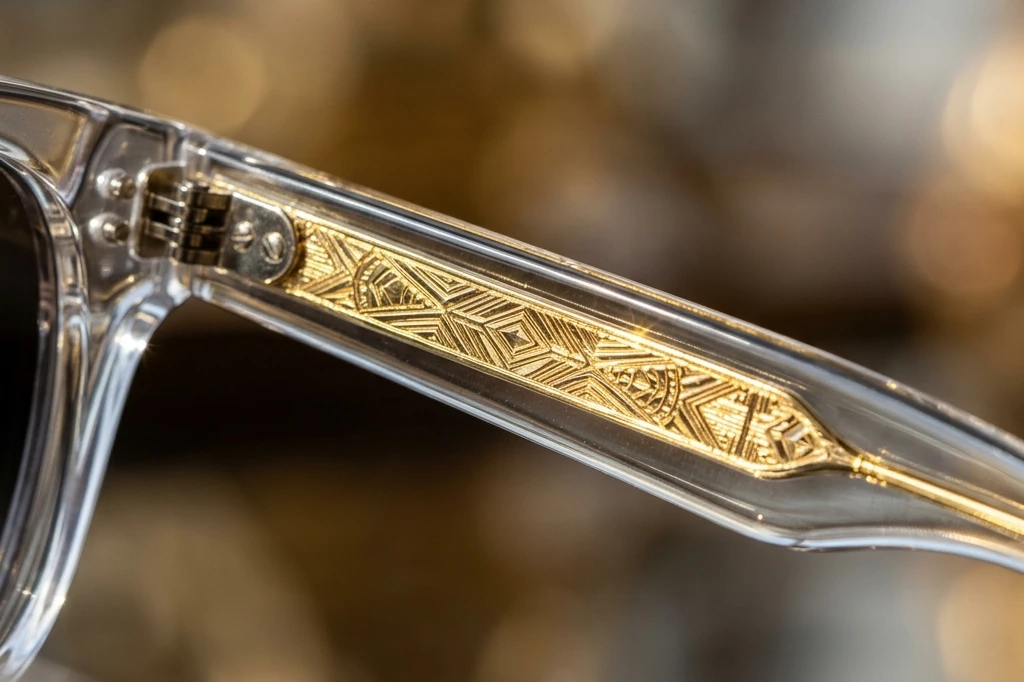
One of the most prominent design directions for 2026/2027 is the use of semi-transparent and crystal-clear cellulose acetates paired with custom-engraved metal core wires. Instead of hiding the reinforcing metal wire inside opaque black or Havana temples, designers are making it the center of attention.
The Manufacturing Process:
The core wire (usually made of brass, nickel-silver, or stainless steel) is first fed into an automatic rotary stamping machine or a high-precision fiber laser marking system. This etches customized patterns—such as custom geometric lines, linear grids, or classical filigree—onto its surface.
To achieve the metallic shine, the core wires undergo a vacuum Ion Plating (IP) process to coat them in rich gold, silver, or rose gold colors.
Finally, the wire is inserted using a high-temperature temple shooter (shooting machine) that heats the transparent acetate blocks to approximately 115°C, inserting the wire into the core of the plastic without creating micro-bubbles or cloudiness.
B2B Strategy:
This technique creates a “suspended” 3D effect that feels highly premium. Because custom core wire tooling requires specialized molds, it serves as a strong barrier to counterfeiting and establishes a unique brand signature.
2. Layered Lamination (拼色与贴合工艺)
Lamination is the process of bonding two or more sheets of cellulose acetate together using heat, pressure, and solvents to create custom multi-colored material blocks. For 2026/2027, lamination is moving from simple dual-layer plates to complex, localized block bonding.
Advanced Lamination Techniques:
- Top-Edge Lamination (眉线拼色): Bonding a contrasting accent stripe (such as a solid dark olive) only along the upper brow line of a crystal-clear frame front.
- Internal-Layer Sandwiching: Inlaying a thin, vibrant neon or metallic sheet between two thicker layers of muted tortoiseshell, which is only visible when viewed from an angle.
- Asymmetric Temple Fusions: Joining a warm tortoiseshell front-temple piece with a translucent colored temple-tip piece using high-frequency friction welding.
Splicing & Curing Standards:
During production, we use pure acetone as a chemical bonding agent. Once the sheets are spliced under hydraulic presses exerting over 15 Bar of pressure, they must be cured in a specialized climate chamber for at least 72 hours at a stable 55°C. This ensures all solvent traces evaporate, preventing delamination and air bubbles during the subsequent CNC cutting phase.
3. Structural Beveling & 3D Sculpted Profiles (立体切割工艺)
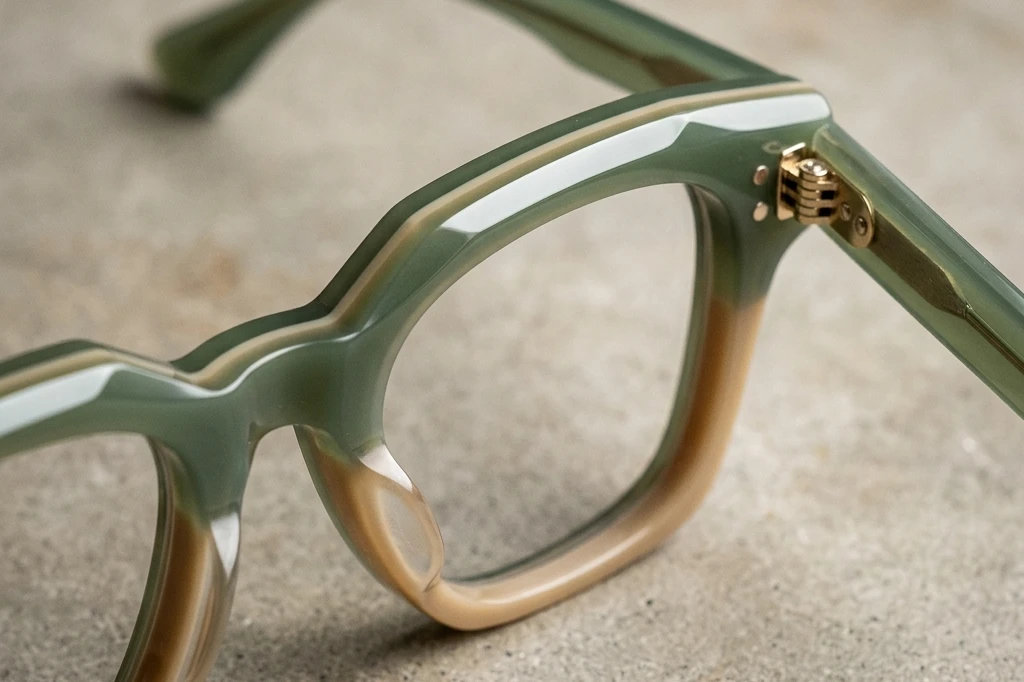
Flat acetate frames are giving way to heavily sculpted, multi-dimensional profiles. CNC milling technology now allows for high-precision beveling along the outer rims and temples.
Precision Machining & Sculpting:
Rims are carved with 45-degree chamfers, hexagonal bevels, or deep step-cut channels. This catches the light differently at various angles, making the frame appear dynamic and structurally substantial without adding excess weight.
At our facility, we use high-speed 5-axis CNC routers operating at spindle speeds up to 18,000 RPM. Specialized diamond-coated milling bits carve the beveled facets.
Because acetate is heat-sensitive, the machining toolpaths are optimized to prevent local melting of the plastic, ensuring the faceted lines remain clean and sharp. After CNC cutting, artisans hand-scrape the facets with custom steel blades to smooth out tool marks before the frames enter the tumbling barrels.
B2B Strategy:
Sculpted frames require advanced 5-axis CNC machining programs and extensive hand-polishing to ensure the transitions between beveled planes remain sharp yet smooth to the touch. This level of craftsmanship justifies a higher retail price point ($200+).
4. Material Transition: The Standard of Bio-Acetate
Sustainability is no longer a marketing option; it is an entry ticket for premium retail distribution. In 2026/2027, Bio-Acetate will increasingly become the default material for high-end collections.
Chemical Composition & Biodegradability:
Standard cellulose acetate uses phthalate-based plasticizers like diethyl phthalate (DEP) to achieve flexibility. Bio-acetate replaces these petroleum-based plasticizers with bio-based, plant-derived alternatives (such as citric acid esters or triethyl citrate).
- Renewable Sourced: Over 68% of the material is derived from renewable natural resources (wood pulp or cotton linters).
- Biodegradation Standard: Complies with ISO 14855 standards, meaning it biodegrades by more than 90% within 115 days when placed in industrial compost conditions, turning into carbon dioxide, water, and biomass.
- Property Performance: Maintains the exact same clarity, tensile strength, color-absorption properties, and premium hand-feel of traditional acetate.
B2B Strategy:
European and North American customs, distributors, and consumers are demanding verified eco-credentials. Sourcing certified bio-acetate (with FSC and OEKO-TEX compliance) helps brands pass retail audits and command a 15–25% price premium.
2026/2027 Color & Texture Palette Forecast
To help your design team plan upcoming collections, here is our curated palette of materials and textures for the 2026/2027 development cycle:
| Trend Theme | Primary Colors | Surface Finish | Recommended Materials |
|---|---|---|---|
| Earthy Minimalist | Sage Green, Warm Sand, Terracotta, Ochre | Matte Brushed or Soft Satin | Raw Cellulose Acetate & Bio-Acetate |
| Digital Ethereal | Glacier Blue, Lilac Mist, Transparent Crystal | High Glossy Polish | Crystal Acetate with Engraved Brass Core |
| Heritage Modern | Dark Espresso, Amber Tortoise, Charcoal | High-contrast Polished front with Matte inner frame | Heavy-gauge (6mm - 8mm) Acetate |
| Industrial Tech | Matte Slate Black, Anodized Titanium, Steel | Bead-blasted Matte | Beta-Titanium & TR90 Co-injections |
At Hermitin, we combine trend-forward design consultation with advanced OEM manufacturing. Whether you want to develop custom laminated colorways, design beveled acetate frames, or implement bio-based materials, our R&D team is equipped to bring your 2026/2027 collections to life.
👉 Contact our OEM Customization Specialists on WhatsApp to receive physical acetate material swatches, request 2D/3D CAD design samples, or consult on your upcoming collection layout!